

Sacred directionality: the celestial powers
Part II: cosmic powers as initiators and gateways for the soul’s journey

This is the second of two essays, foreshadowing my C.G. Jung public lecture, in Bristol on Saturday June 13th, on the topic of ‘Initiatory landscapes: maps of personal transmutation.’ See these links for in-person tickets and online tickets.
Ancient cosmologies didn’t simply orient themselves according to abstract directions, but rather according to the movements of specific heavenly powers whose journeys through the sky structured time, myth, ritual and destiny. The heavens were a wondrous theatre of divine activity, where stars, planets and constellations narrated stories, marked sacred seasons and opened pathways between worlds.
The sun and the architecture of time
The sun occupies a privileged position as governor of day and night; regulating seasons and sustaining life. Unsurprisingly, solar symbolism permeates almost every religious tradition.
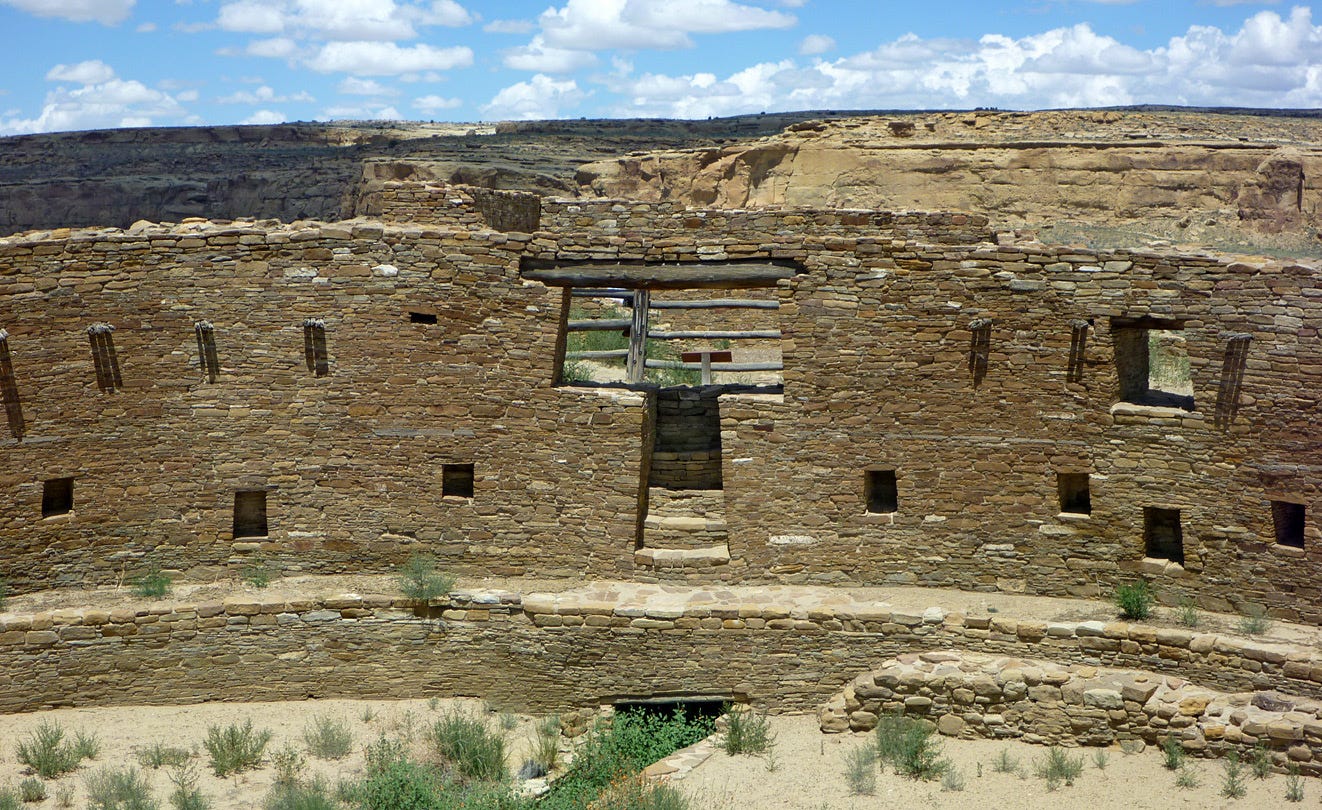
Yet the sun’s significance extends beyond fertility and illumination; its daily movement creates a perpetual drama of death and rebirth. Each evening it descends into the underworld, and each dawn it emerges victorious. This cycle provided one of humanity’s most powerful metaphors for immortality. Solar myths repeatedly depict a journey through darkness followed by triumphant return. Egyptian theology, Celtic symbolism, Greek religion and countless other traditions share variations on this theme.
At winter solstice, the cosmic drama reaches its culmination when, at the the year’s darkest point, the sun appears weakest. But light triumphs over darkness and life reasserts itself as immediately thereafter the sun begins its return. Numerous traditions interpreted this moment as evidence that cosmic order continually renews itself despite the proximity of chaos and death.
Kingship and solar sovereignty
Solar symbolism frequently became intertwined with political authority. In Celtic traditions the health of the kingdom depended upon the integrity of kingship. The ruler functioned as an intermediary between cosmic order and earthly society. Thus the sun’s fertility-producing powers became analogues for royal authority. Good governance ensured prosperity, abundance and harmony. Corrupt rule threatened famine, disorder and environmental decline.
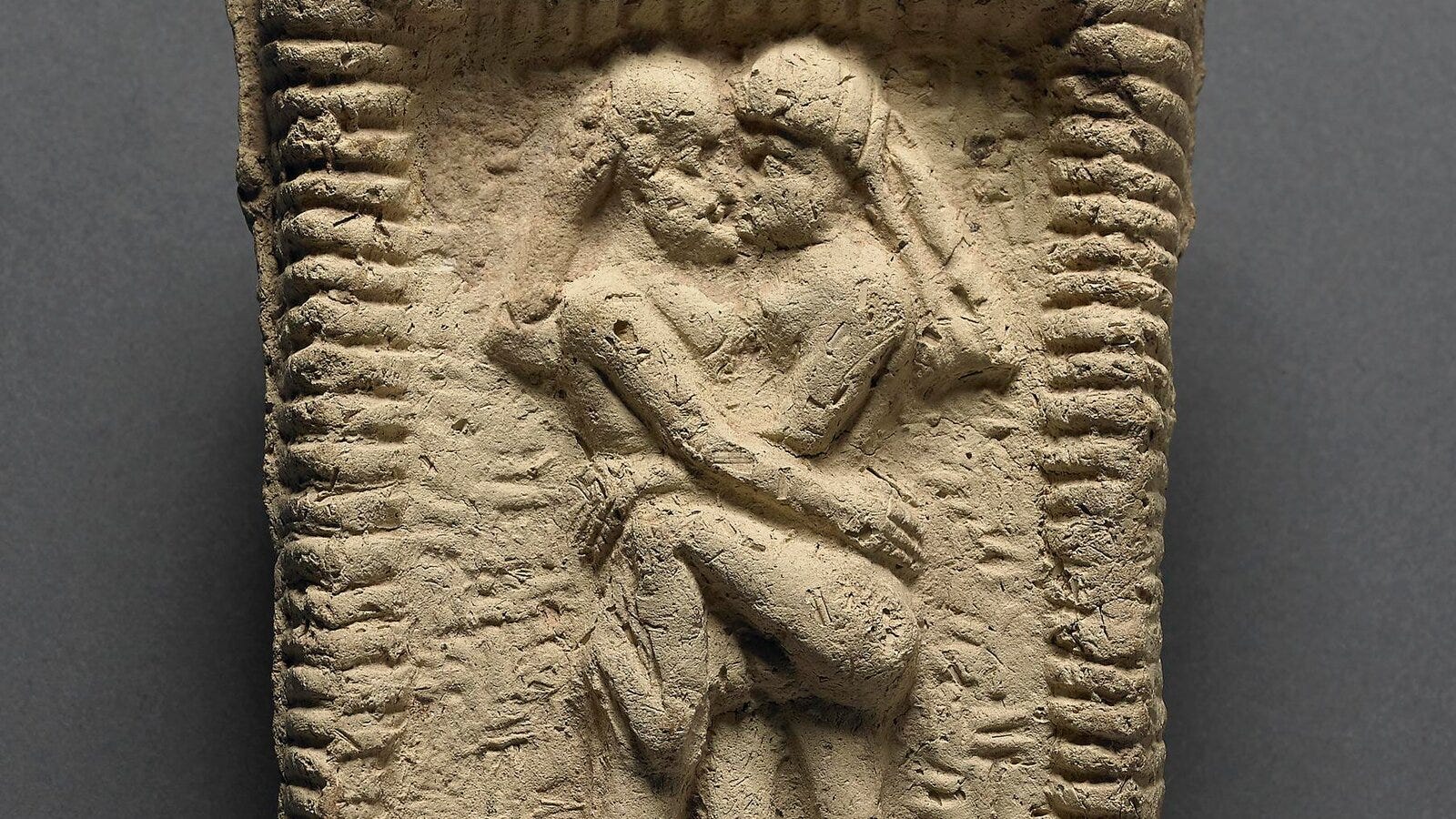
The sacred marriage between king and land expressed this relationship. The earth goddess required fertilisation by a solar consort. Human rites mirrored cosmic processes in a hieros gamos - a tradition found across cultures, from the Sumerian rite between regent and priestess enacting the union of the fertility goddess Inanna and the shepherd god Dumuzi, to the hypostases of Yngvi-Freyr who conducted a seasonal wagon-tour, bedding local women whom he chose to represent Mother Earth. Sovereignty became a form of cosmic maintenance. The king did not merely govern; he participated in the renewal of creation itself.
Sirius: the initiatory star
If the visible sun ruled the upper world, many traditions attributed comparable significance to Sirius; the brightest star in the night sky occupied a uniquely important position in numerous ancient cultures. In Egypt its heliacal rising announced the imminent flooding of the Nile and marked the beginning of the Sothic year - time itself was calibrated according to its appearances. Its annual disappearance and re-emergence linked it intimately with death and resurrection. For approximately seventy days Sirius vanished from view before returning to the sky. This interval corresponded closely with Egyptian embalming practices and funerary observances. Sirius therefore became associated not only with seasonal renewal but with posthumous transformation.
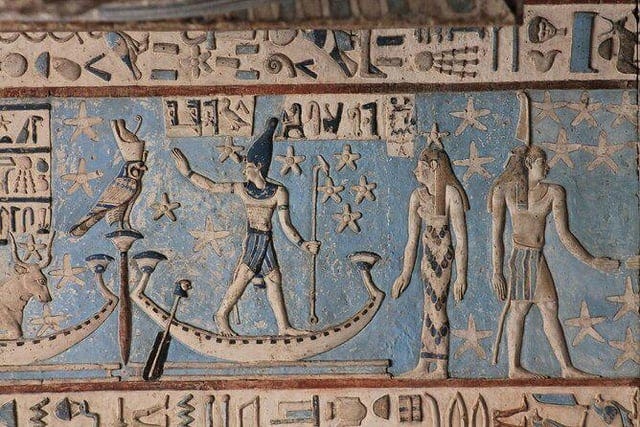
Egyptian theology identified Sirius with Isis. As the divine spouse of Osiris and the power responsible for his resurrection, Isis embodied the capacity to overcome death, and so the cycle of Osiris became a template for spiritual regeneration. Death was not an ending but a transformation - the chief revelation of the Mysteries.
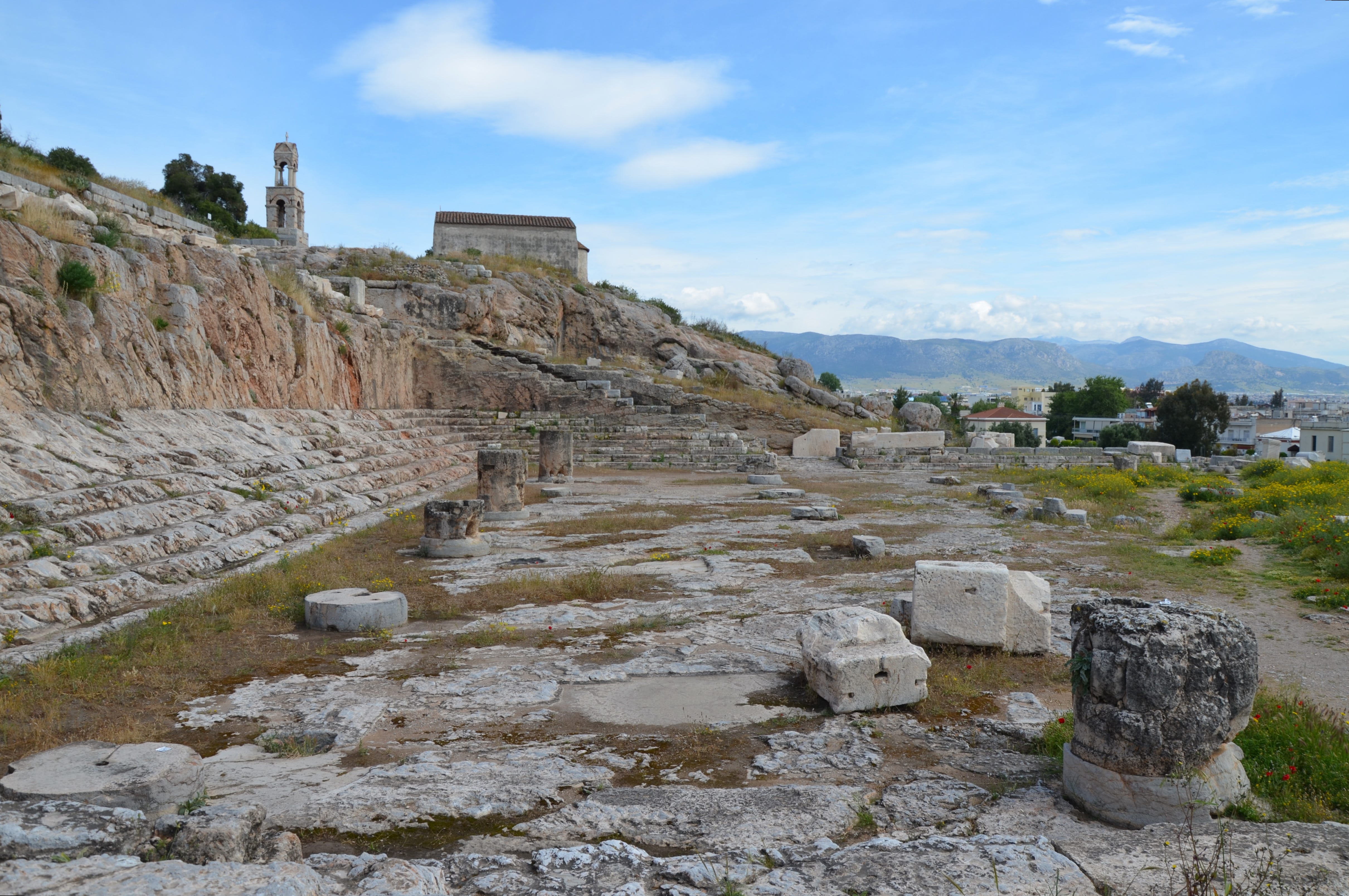
Sirius played a role in the timing of the Mysteries, and in the enactment of the symbolic deaths and symbolic rebirths afforded by initiation. The height of the Mysteries took place over a nine-day period and occurred in September, which marked the return of Persephone from the underworld and the renewal of life and fertility to the land. The simultaneous culmination of Sirius was celebrated in the great Sanctuary of Demeter at Eleusis, when the path of its midnight rising was reflected in the temple’s main axis. The initiate was a Persephone-hypostasis, returning from the abyssal trial; Sirius represented the light of initiation, guiding the soon-to-be-Mystai through the underworld and darkness of ignorance into illumination. Sirius thus became a celestial emblem of initiation itself.
Katabasis and anabasis
The Mysteries sought to transform attitudes toward death. Initiates emerged convinced that existence continued beyond the grave. The paired movements of descent and ascent constitute one of humanity’s oldest religious motifs: Persephone and Orpheus enter Hades; Odysseus consults the dead; Aeneas journeys below. Shamans descend into underworlds and ascend into heavens. Even Christian theology retains the pattern in the Harrowing of Hell and the Ascension. These narratives reflect the structure of the three-tiered cosmos, where wisdom and gnosis lie below as well as above. Transformation requires a passage through trauma and abyssal darkness. The candidate symbolically dies in order to be reborn, and so initiation becomes a controlled encounter with death. Sacred directionality provides the spatial framework for this process. The initiate moves west to east, descending and ascending, just as the sun moves between horizons.
The celestial gates
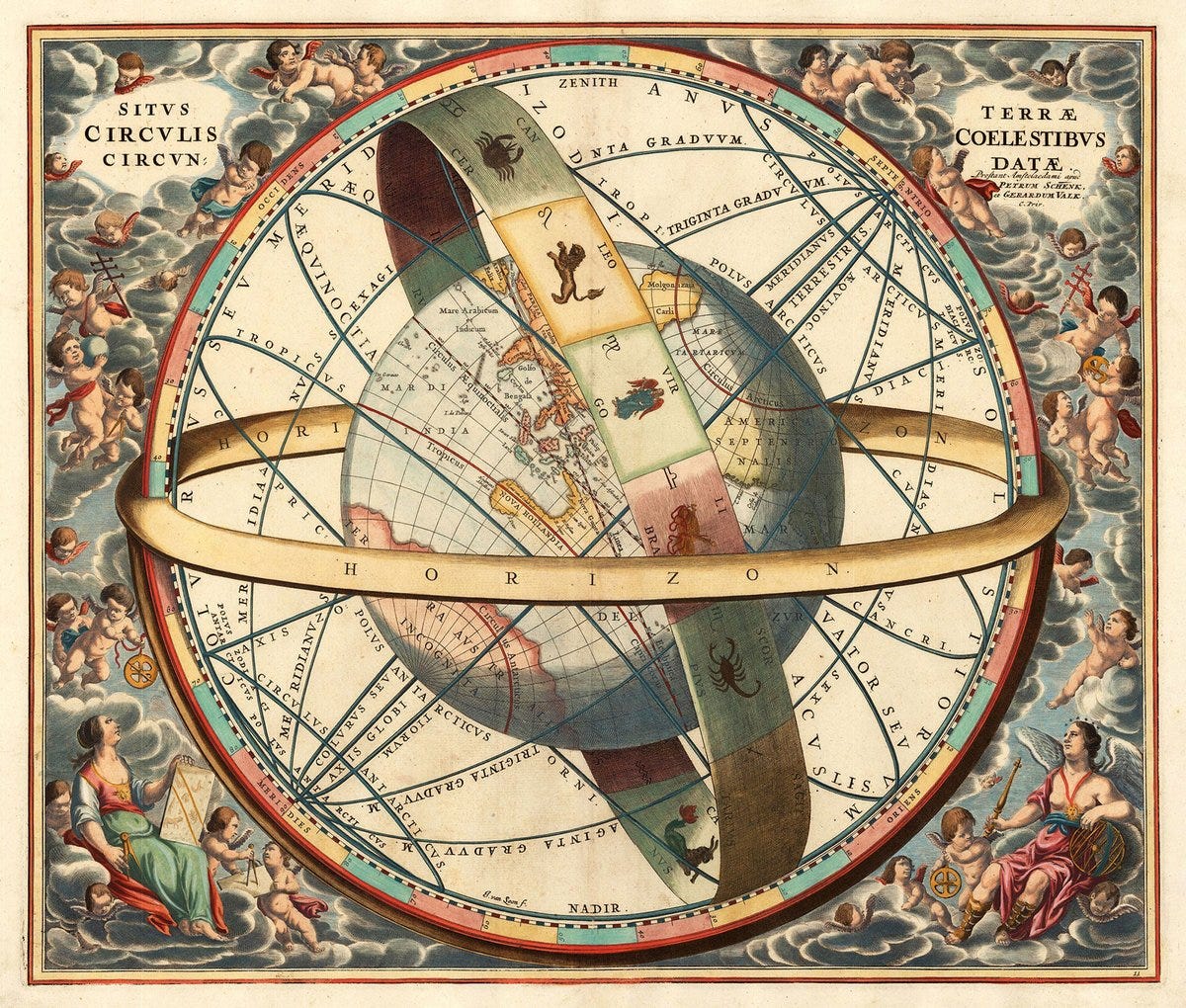
One of the most fascinating expressions of sacred directionality is the concept of celestial gates. Ancient philosophers, theologians and mystery traditions asserted the existence of portals linking the earthly realm with higher and lower worlds. The most influential formulation appears in the writings of Porphyry and Macrobius, where both describe two cosmic gateways associated with the solstices: the northern gate corresponds to Cancer, while the southern gate corresponds to Capricorn. These locations derive from the intersections of the Milky Way and the ecliptic - a phenomenon only occurring at the solstices. It was thought that souls descending into embodiment pass through one gate, while souls ascending toward immortality pass through the other. Cancer becomes the gate of men; Capricorn the gate of gods.
The imagery is potent because it links concrete, astronomical observations directly with metaphysical beliefs. The heavens themselves become a map of the soul’s journey.
The Milky Way as road of souls
Many cultures similarly regarded the Milky Way as a pathway traversed by spirits, understood as a celestial road, river or bridge extending across the heavens. In this context the solstitial intersections acquire additional significance, becoming junctions where cosmic traffic passes between realms. The celestial gates therefore become specific astronomical locations invested with theological meaning. When the sun reaches the solstitial thresholds it symbolically touches these portals, and so the yearly solar cycle becomes entwined with the cycle of incarnation and return.
Asterisms, planets and sacred timing
While the sun and Sirius dominate numerous traditions, other celestial bodies also contributed to sacred directionality. The Pleiades functioned as agricultural markers throughout the ancient world. For example, the Zuni peoples tracked planting seasons according to their appearances. Greek traditions associated them with nymphs and seasonal transitions. Planets were understood as celestial intelligences whose movements conveyed divine intentions. Mesopotamian astrologers developed sophisticated systems correlating planetary motions with terrestrial events. Later traditions elaborated these correspondences into intricate cosmological frameworks. The heavens thus became a script where, to read celestial movements, was to interpret the intentions of divinity itself.
The Grimoires and directionality
The grimoire tradition preserves many of the same concerns with sacred directionality found in earlier cosmological systems, albeit in a Christianised and increasingly abstract form. Rather than representing independent spiritual entities, many angelic, planetary and infernal powers can be understood as custodians of cosmic regions, thresholds and routes between worlds. The seven Olympic Spirits of the Arbatel, for example, are assigned to the seven classical planets and their corresponding celestial spheres. As such, they occupy a vertical cosmology analogous to the upper regions of the three-tiered cosmos, governing successive stages in the soul’s ascent through the heavens.
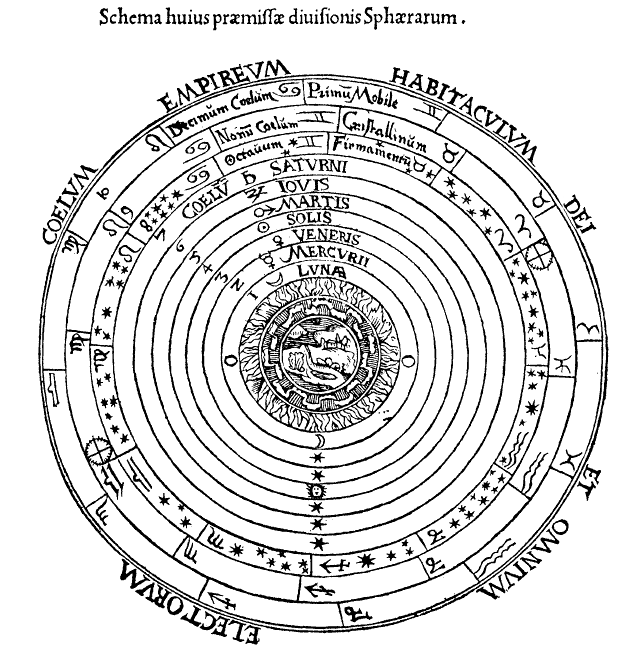
More explicit directional correspondences survive in ceremonial magic’s fourfold arrangement of archangels, elemental rulers and infernal kings. Raphael, Michael, Gabriel and Uriel preside over the cardinal quarters, mirroring the directional guardians found in traditions as diverse as Hinduism, Buddhism, Norse myth and ancient Egypt. Likewise, many grimoires assign powerful demonic rulers to the four quarters of the world, reflecting a cosmological geography inherited from late antiquity.
The ritual circle itself functions as something like a portable cosmogram. In correspondence with an Etruscan town, a medicine wheel or a sacred enclosure, the ritual circle establishes a centre, marks out the quarters and creates a bounded space within which communication between realms becomes possible. Critically, the magician occupies the position of the axis mundi, standing at the intersection of heaven, earth and underworld. In this sense, ceremonial magic preserves the ancient worldview already discussed: a sacred centre surrounded by directional powers, linked by celestial gates and traversed by specialists capable of navigating between worlds.
The Gate between worlds
Ultimately, sacred directionality concerns relationality. The purpose of alignment, orientation and celestial observation was not merely to record astronomical events but to establish methods of mediation: between heaven and earth, living and dead, human communities and divine powers; between visible and invisible worlds. Monuments aligned to solstices; temples oriented toward significant stars; cities organised around sacred centres, and mystery rites structured around descent and ascent all express the same underlying aspiration: human beings seeking participation in cosmic order. Directionality provided the means for this: the cardinal points, solstitial horizons, sacred centres and celestial gates formed a symbolic architecture through which the universe could be understood and inhabited.
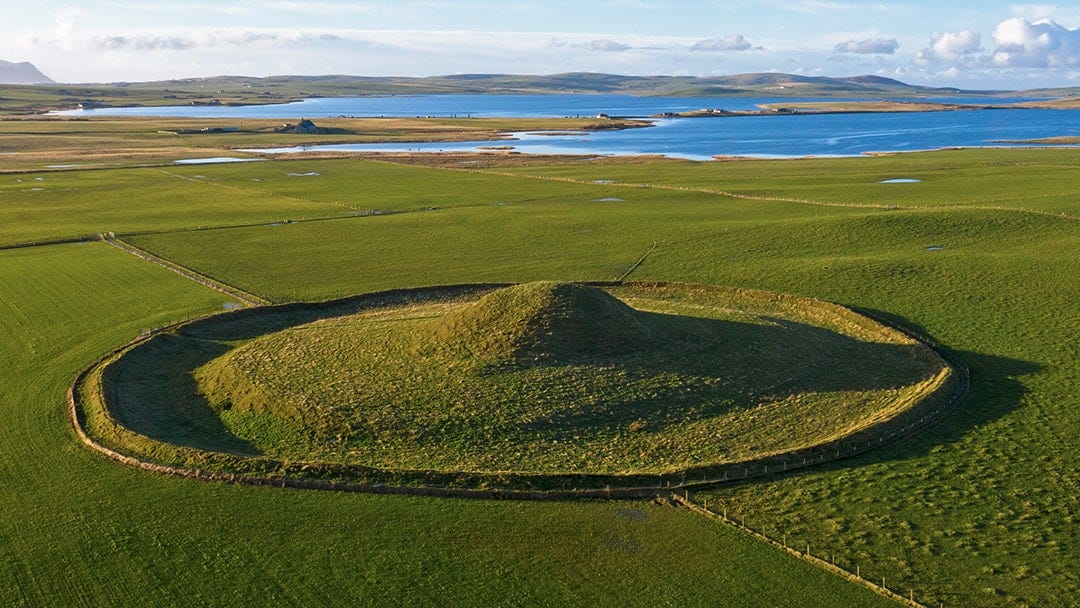
What emerges from all this is an symbolic but consistent and integrated worldview; an acceptance that the cosmos was alive and pregnant with meaning and intent. Its structure could be observed in the heavens, and its order reproduced upon the earth. Cosmic powers could be contacted through ritual, enabling spiritual pathways to be traversed by the soul. Sacred directionality was therefore considerably more than orientation; it was and is a means of locating humanity within a living, layered, permeable and enchanted cosmos.
Same old shit.regurgitated pap.meaningless.no context.more gordon drivl.